5 Signs Your Business Needs to Bring Photography In-House.
Have you reached the point in your business where it’s time to bring photography in-house?
There comes a point in every creative business where outsourcing your imagery stops feeling supportive, and starts feeling like a bottleneck.
I’m an award-winning brand photographer, and I’ll be honest in a way that other photographers rarely are (because on the surface, it can cost bookings).
Here it is: Brands don’t need to book us for photography all the time.
In fact, there’s a clear point when brands needs to bring photography in-house.
Let’s see if this sounds familiar …
You’re waiting on galleries (and you might not be first in line)
You’re compromising on vision or creative authority
You’re spending more than you’d like on new imagery
You’ve gone for a ‘budget’ option and it didn’t quite deliver
Or, you simply can’t afford to outsource every time you need fresh content.
You might have felt this tension building (or often found yourself thinking that photography is ‘too expensive’) without realising what’s actually happening beneath the surface.
Because often, this isn’t a pricing problem, it’s actually a capacity shift.
A sign that this part of your business is ready to be brought in-house.
And no, I’m not committing treason against my own kind. I’m saying this as someone who learnt photography six years ago to capture her mother’s creative studio and small business. I’ve sat on both sides of this.
Ultimately, I want better outcomes for all involved:
Talented photographers being paid their worth — not haggled, not micro-managed, and instead being respected as independent business owners.
And growing brands feeling empowered to bring photography in-house, because they’ve reached a level where creative control and consistency matter.
The shift you need to make …
Bringing photography in-house isn’t about replacing professionals, it’s about:
speed
ownership
consistency
and ultimately, profitability
It’s about becoming the kind of brand that can create, test and launch without waiting on anyone else.
If you’ve been feeling that pull lately, here are five signs you’re already there.
No. 1: You’re Constantly Waiting on Content
If your marketing is delayed because:
you’re waiting on a shoot
waiting on edits
or spacing out content to ‘make it last’
… you’re not actually operating at full capacity.
Modern business move quickly, and social media moves even faster.
When your content pipeline relies entirely on external timelines, you lose momentum — and often, opportunities or sales.
In-house photography can bring you creative freedom on demand.
No. 2: You have a clear vision, but it’s getting lost in translation.
You can see the gallery in your mind, and know the style and feeling you want captured. Then, when the images come back, they’re close, but not quite what you envisioned.
This isn’t a failure on anyone’s part; it’s simply the gap between your unique vision, and someone else’s creative interpretation. If the goal was a plug-in-and-play prompt and instant result, you’d be using AI. Creatives are not vending machines.
At a certain level, the most efficient way to close that gap, is to have complete control over the creative direction. Whether that looks like capturing the imagery yourself, or up-skilling a team member, will depend on your business’ unique needs and capacity.
Because let’s be realistic: in traditional business structure, with an in-house team, this kind of alignment can be built into the role. Creative direction becomes part of the job description, and management is inherent.
But when you’re working with contractors (people who running their own businesses, with their own creative integrity) the dynamic is different. You’re not managing an employee, you’re collaborating with another creative and business owner — and that means there should be an inherent, healthy boundary.
While you can guide, brief and reference, you should not micro-manage the creative process. Not only does this strain the working relationship, it often leads to a worse result.
Ultimately, remember that when it comes to hiring contract photographers, you’re not hiring someone to replicate your vision or Pinterest board perfectly — you’re outsourcing their interpretation of it.
No. 3: You’re investing thousands, but still need ‘more’
Whether you’re booking in a big campaign, or drip-feeding little content shoots here and there, you always need more content. Always.
Social media is a hungry beast that constantly needs feeding, and you probably also need to test different creatives in your ads.
Suddenly that latest photoshoot only lasted you a month (maybe a couple at most).
This cycle can quietly become one of the biggest expenses in a creative or product-based business.
Bringing photography in-house doesn’t eliminate all professional photoshoots; it simply allows you to fill the gaps, extend campaigns or accelerate turnarounds without the fees or constant reinvestment.
No. 4: Your brand is growing, but your content isn’t keeping up
Re-using your galleries from four years ago is the panty-line we can all see.
As your business evolves, your visuals need to evolve with it.
Relying on outdated imagery, reusing the same content, or avoiding posting because you ‘don’t have anything new’ creates a disconnect between your brand today and how it appears online.
In-house photography allows your content to grow with you, in real time.
No. 5 You want control of the IP
This is often the biggest one, and the quietest.
As a photographer, I can tell you that one of the most common (and misunderstood) requests is being asked for the ‘RAWs’.
Just for clarity: ‘RAW’ files aren’t simply the ‘unedited photos’. They are data files that are unfinished, unprocessed, and not intended for delivery. You need to understand editing software like Adobe Lightroom to edit and develop them properly yourself (so it’s not just a filter on your phone, or a few adjustments in Canva).
This is why, across the industry, professional photographers rarely provide RAW files.
Clients are purchasing the final product – the edited, finished image – while the RAW files (and the rights attached to them) remain with the photographer.
In many cases (myself included) clients are also not permitted to re-edit delivered images, as this directly impacts the integrity of the work and the photographer’s name attached to it.
So when business owners say they want the RAWs, what they’re often really asking for is something deeper.
They want access, flexibility and control.
Because what they’re actually craving is:
Ownership over imagery featuring their product
The ability to experiment
The freedom to create content when they need it
And the confidence to make adjustments when inspiration strikes
At a certain point in business, that desire makes complete sense. Because when your brand is established (or growing quickly) your visuals aren’t just content, they’re assets.
And for many business owners, that’s the moment they begin bringing photography in-house; not to replace professionals, but to regain creative ownership.
Deep down, if you’ve read this far, you already know that’s something you need to have a level of control over.
So, what are your next steps?
First of all, this doesn’t mean you need a full studio setup (although, if you can allocate a space in your office or HQ, that’s fabulous!).
It doesn’t mean expensive gear or years of training.
It simply means learning:
how to use what you have
how to master your camera settings like a pro (without the overwhelm)
how to capture your brand intentionally
how to edit it beautifully
and how to maximise the exposure of those images online
Because photography isn’t reserved for us professionals, it’s a creative skill.
And like any skill, it can be learned.
If you’re ready to stop relying on outsourced imagery and start creating your own, we’ve created The DIY Brand Photography Playbook for you. This is the perfect entry-point for business owners and creatives who want to take control of their visuals.
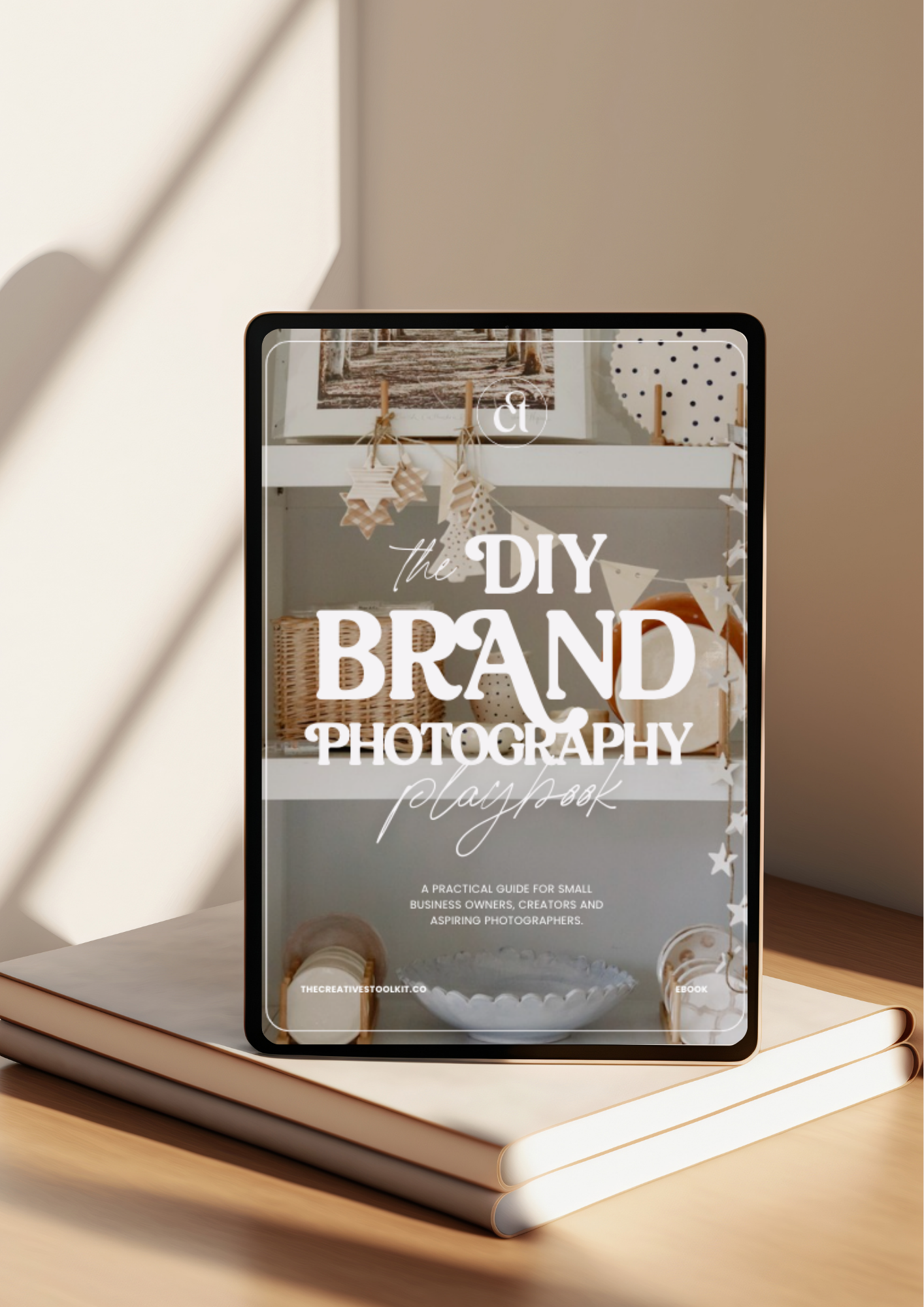


Create beautiful brand photos without hiring a photographer.
The DIY Brand Photography Playbook is a practical 30-page guide designed for small business owners, creators, and aspiring photographers who want to capture professional imagery for their brand using simple tools and natural light.
Inside this beautifully designed handbook, you'll begin to understand how to photograph products, people, and spaces in a natural, authentic way — without needing expensive equipment or a studio setup.
Inside the playbook you'll discover:
• How to choose the right beginner camera
• The five essential photos every brand should capture
• Simple product photography techniques using natural light
• How to photograph people naturally with easy prompts
• How to capture your workspace and brand environment
• Recommended camera settings to start exploring manual control
• Practical shot lists for personal branding, e-commerce and shops
Whether you're building a brand, launching a small business, or learning photography for the first time, this guide will give you the foundations to start creating professional imagery today.
Instant digital download.